Global buyers need more than a sharp edge when selecting Carbide Slitting Knives. They need stable geometry, verified carbide grade, controlled runout, and dependable supply. A knife may look perfect under factory lighting, yet fail after a few production hours. That gap deserves attention.
As cutting-tool specialist Dr. Geoffrey Boothroyd emphasized, “Tool life depends on the complete cutting process, not the tool alone.” This principle remains highly relevant. Material hardness, web tension, blade clearance, machine alignment, and operating speed all influence performance. Even a premium carbide knife can chip when the setup is careless.
The strongest suppliers provide measurable details. Look for cutting diameter, bore tolerance, thickness range, edge angle, carbide specification, coating options, and inspection records. Ask whether the supplier can support trials with your actual film, paper, foil, rubber, or composite material. Small samples often reveal more than polished sales claims.
Global purchasing also requires practical reliability. Confirm packaging strength, batch traceability, replacement consistency, and communication across time zones. Delivery promises can sound impressive. They still need evidence.
There is no universal “best” Carbide Slitting Knives solution. That statement is uncomfortable, but useful. A knife designed for abrasive laminated film may perform poorly on soft paper. Buyers should compare total cutting life, not only the initial price. Careful testing, documented specifications, and honest supplier feedback create a safer path toward consistent production.
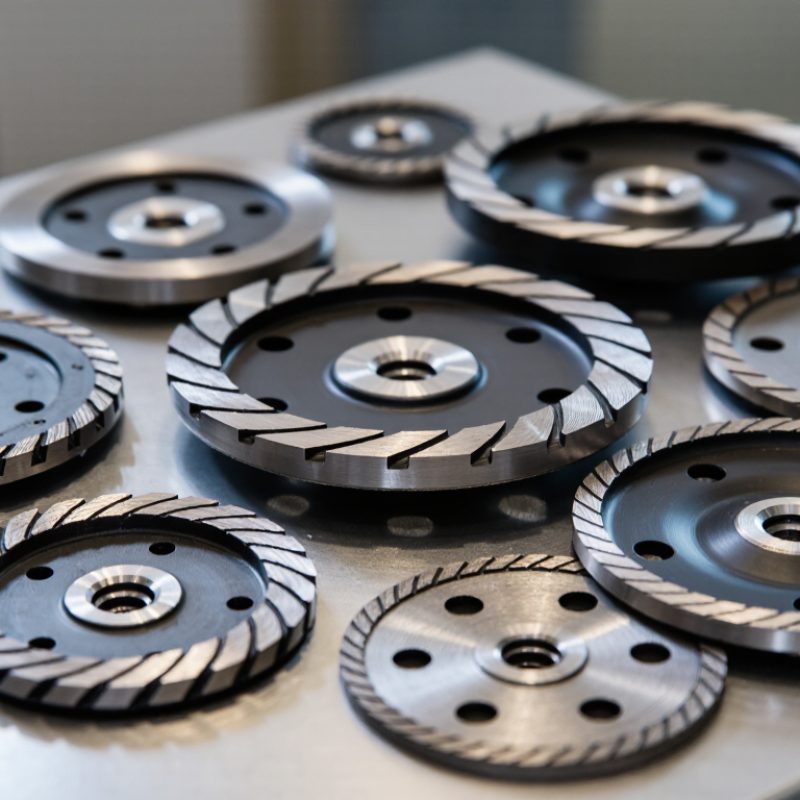
Carbide slitting knives are rotary cutting tools designed to divide continuous materials into accurate widths. They commonly process paper, film, foil, laminates, rubber, and other flexible sheets. Unlike ordinary steel blades, carbide edges resist abrasion and retain their profile during long production runs. This matters on high-speed lines. A stable edge can reduce burrs, dust, tearing, and unplanned blade changes. However, carbide is hard but not indestructible. Impact, poor alignment, or incorrect handling may cause chipping.
The structure usually includes a carbide body or carbide cutting insert, a precision-machined hub, a bore, and a sharpened edge. Some designs use a steel core with a bonded carbide rim. The bore must match the machine arbor closely. Even a small mismatch can create vibration marks across the web. Edge geometry also varies. A sharper angle may cut thin film cleanly, while a stronger angle can support thicker or abrasive material. Coatings may further improve wear resistance, but they cannot correct a weak substrate or poor grinding quality.
For global buyers, reliable specifications should include outside diameter, thickness, bore size, tolerance, material grade, edge angle, and measured runout. Ask for inspection records when consistency is critical. Check the knife against the actual substrate, line speed, and tension settings. A blade that performs well on paper may disappoint on laminated film. This is an easy mistake. Careful testing remains necessary, because catalog descriptions rarely show every production variable.
Top Carbide Slitting Knives for Global Buyers?
For industrial slitting, carbide grade matters more than appearance. Tungsten carbide provides high hardness and edge stability, while cobalt improves toughness under impact. The USGS Mineral Commodity Summaries 2024 estimated global tungsten mine production at 84,000 metric tons in 2023. China accounted for approximately 67,000 tons. This concentration makes material traceability important for international buyers.
Fine-grain carbide suits thin films, foils, and clean continuous cuts. Coarser grades can better tolerate vibration or interrupted production. Yet harder is not always better. Excessive hardness may cause edge chipping during coil changes. I have seen this mistake in high-speed trials.
Coating selection should match the material being cut. TiN offers general wear resistance and easy visual inspection. TiCN can provide higher hardness for abrasive laminates. AlTiN performs well under elevated cutting temperatures, especially when dry running is unavoidable. Coating thickness, edge preparation, and adhesion require verification, not assumptions. ISO 513:2012 provides standardized cutting-tool material classifications, but it does not replace application testing. A 2024 report from the International Energy Agency identifies tungsten as a strategically important mineral, reinforcing the need for recycling and documented supply chains. Buyers should request carbide composition, coating method, hardness data, and batch inspection records before approving production quantities. Small details matter.
| Knife / Material Configuration | Typical Composition or Grade Range | Typical Hardness | Common Coating Options | Suitable Applications | Performance Characteristics | Buyer Selection Notes |
|---|---|---|---|---|---|---|
| Fine-grain tungsten carbide slitting knife | WC-Co cemented carbide; approximately 3–6% cobalt binder; submicron to fine WC grain size | Approximately 1,500–1,800 HV30 | Uncoated, diamond-like carbon for selected non-ferrous applications, or thin PVD coatings | Film, foil, paper, laminated materials, labels, rubber, and abrasive non-metallic webs | High wear resistance, sharp edge retention, and good dimensional stability when properly supported | A practical general-purpose choice; select a tougher grade if the web contains hard inclusions or interrupted cuts |
| Ultra-fine-grain carbide knife | WC-Co cemented carbide; commonly 5–10% cobalt binder; ultra-fine WC grain structure | Approximately 1,400–1,800 HV30 | Uncoated or low-friction PVD coating, depending on substrate and material being slit | Thin films, battery separator materials, adhesive tapes, flexible laminates, and precision webs | Supports fine cutting edges and improved resistance to edge chipping compared with very brittle hard materials | Confirm edge geometry, runout, and surface finish requirements because thin webs are sensitive to burrs and dust |
| Tougher medium-grain carbide knife | WC-Co cemented carbide; approximately 10–15% cobalt binder; medium WC grain size | Approximately 1,100–1,500 HV30 | Usually uncoated; selected PVD coatings may be used where friction or adhesion is a concern | Abrasive paper, fiberglass-reinforced sheet, rubber compounds, composite webs, and interrupted cuts | Higher fracture toughness and impact tolerance, with lower wear resistance than finer, harder grades | Recommended when shock loading, vibration, or occasional inclusions make brittle edge failure more likely |
| TiAlN-coated carbide knife | Fine- or ultra-fine-grain WC-Co substrate with a titanium-aluminum nitride PVD coating | Substrate-dependent; coating commonly measures about 2,000–3,500 HV | TiAlN or related aluminum-containing nitride coating; typical PVD thickness is about 1–4 μm | Abrasive films, engineered laminates, technical textiles, and applications involving elevated cutting temperature | High coating hardness and oxidation resistance; can reduce wear when the coating is correctly matched to the substrate | Check coating adhesion and edge preparation; an excessively thick coating can affect the cutting edge geometry |
| TiN-coated carbide knife | WC-Co carbide substrate with a titanium nitride PVD coating | Substrate-dependent; TiN coating is commonly around 2,000–2,500 HV | TiN; typical PVD thickness is about 1–4 μm | General industrial slitting, paper, packaging film, non-ferrous foil, and moderately abrasive webs | Good surface hardness, recognizable coating color, and useful resistance to adhesive wear in suitable conditions | A cost-effective coating option when cutting temperatures and chemical exposure are moderate |
| CrN-coated carbide knife | WC-Co carbide substrate with a chromium nitride PVD coating | Substrate-dependent; CrN coating is commonly around 1,500–2,000 HV | CrN; typical PVD thickness is about 1–5 μm | Sticky polymers, adhesive-coated webs, aluminum foil, and humid or mildly corrosive production environments | Good corrosion resistance and relatively low adhesion tendency against selected non-ferrous and polymeric materials | Consider when material transfer, residue buildup, or moisture exposure is more important than maximum coating hardness |
| DLC-coated carbide knife | Fine-grain WC-Co carbide substrate with a hydrogenated or hydrogen-free diamond-like carbon coating | Substrate-dependent; DLC hardness varies widely, often about 1,000–3,000 HV | DLC; coating thickness often ranges from about 1–5 μm | Low-friction film, polymer, tape, medical packaging, and selected non-ferrous cutting applications | Very low friction and reduced material adhesion; performance depends strongly on substrate preparation and temperature limits | Request application-specific friction, adhesion, and temperature data before selecting DLC for high-speed production |
| Solid carbide knife with polished edge | Uncoated WC-Co carbide, precision-ground and polished; grade selected according to wear and toughness requirements | Approximately 1,100–1,800 HV30, depending on grade | None; surface finish and edge preparation provide the primary friction-control benefits | Clean-room-sensitive film, battery materials, optical films, paper, and applications where coating particles are undesirable | No coating interface to delaminate; polished surfaces can help reduce residue and improve web release | Specify edge radius, surface roughness, concentricity, and allowable burr level in the purchase specification |
| Carbide-tipped steel slitting knife | Tungsten carbide cutting segment brazed or mechanically fixed to a steel body | Carbide tip typically about 1,100–1,800 HV30; steel body is substantially softer | Optional PVD coating on the carbide tip where geometry and coating process permit | Large-diameter industrial knives, heavy-duty webs, packaging board, and applications requiring a robust body | Combines a wear-resistant cutting edge with a tougher, more economical steel support structure | Verify joint integrity, balance, thermal expansion behavior, and replaceability before ordering for high-speed equipment |
Note: Hardness, coating thickness, and binder content are representative industry ranges. Final performance depends on knife geometry, edge preparation, machine setup, web tension, cutting speed, material abrasiveness, and alignment.
Global buyers should compare carbide slitting knives by application, not catalog diameter. Smithers’ 2024 flexible-packaging forecast places the market above US$300 billion by 2028. That scale increases pressure on edge life, dust control, and cutting consistency. Film, foil, paper, and laminates fail differently. A knife that cuts BOPP film cleanly may chip against abrasive paper. Check substrate thickness, tensile behavior, hardness, and line speed first.
For thin films, a polished carbide edge and low runout can reduce tearing and web distortion. Foil often needs a sharper edge with controlled clearance. Coated paper may require tougher carbide, because mineral fillers accelerate wear. Compare grain size, carbide grade, edge angle, and surface finish. Harder is not always better. Brittle edges can fail suddenly.
The World Bank reported global merchandise trade at roughly US$33 trillion in 2023, supporting demand for reliable packaging conversion worldwide. Still, market growth does not guarantee longer knife life. Ask suppliers for measured cutting hours, scrap rates, and inspection records. Request samples from your actual material. A short trial reveals more than a polished brochure. I would also question identical recommendations for every line. That approach is convenient, but probably incomplete. Temperature, tension, shaft alignment, and operator handling can change results significantly. Record these variables during testing. Reliability comes from repeatable evidence, not the lowest quotation.
Top Carbide Slitting Knives for Global Buyers?
Carbide slitting knives must match more than the material being cut. Buyers should confirm outside diameter, bore size, thickness, and cutting angle. Common industrial sizes range from 50 to 300 mm, but machine drawings remain decisive. A 0.02 mm bore mismatch can create runout, vibration, and uneven web edges. For precision converting, request measured radial runout, parallelism, and edge radius. ISO 286-1 tolerance principles help buyers compare shaft and bore fits across regions.
Machine compatibility also depends on holder design, spacer width, blade overlap, and operating speed. A knife may fit mechanically but still fail under high tension. In slitter commissioning, I would check the spindle diameter, locking method, maximum RPM, and material hardness first. Tungsten supply matters too. The U.S. Geological Survey’s Mineral Commodity Summaries 2024 reported approximately 81,000 metric tons of global tungsten mine production in 2023. That supports carbide availability, but it does not guarantee consistent tool quality.
Tips: Send a full machine drawing, not only a photograph. Specify millimeters and tolerance grades. Ask for inspection records with each batch. Smithers’ global packaging outlook identifies continued growth in flexible packaging, increasing demand for stable, clean cuts. Still, some specifications are easy to overlook. Coating choice, coolant exposure, and resharpening limits deserve equal attention. A cheaper knife can become expensive after repeated setup corrections.
Typical size, tolerance, and machine-compatibility guide for carbide slitting knife selection
The chart compares common carbide slitting knife configurations used on compact, mid-width, and heavy-duty slitting machines. Outside diameter, bore diameter, and knife thickness are shown in millimetres; maximum recommended radial runout is shown in micrometres. Final dimensions and tolerances should always be matched to the machine shaft, spacer system, operating speed, and OEM drawing.
Top Carbide Slitting Knives for Global Buyers?
Buying carbide slitting knives requires more than comparing prices. Knife geometry, carbide grade, edge preparation, coating, and runout directly affect cut quality. There is no universal tolerance for every slitting application, so suppliers should confirm material thickness, hardness, speed, and machine design. The ISO Survey 2022 recorded 1,265,216 ISO 9001 certificates worldwide. Still, certification alone proves little. Buyers should request recent inspection records, material certificates, and corrective-action evidence.
Evaluate suppliers through measurable trials. Ask for radial runout data, edge-radius tolerances, hardness results, and dimensional reports from calibrated equipment. A practical trial should measure burr formation, knife life, strip-edge quality, and replacement frequency. Review production capacity, backup tooling, packaging protection, and communication speed. UNCTAD’s Review of Maritime Transport 2023 notes that over 80% of global merchandise trade by volume moves by sea. Therefore, moisture-resistant packaging and stable export documentation matter. Delays can damage production schedules more than a small price difference.
Tips:
Request three sample knives before signing a large order. Use the same substrate and machine settings during comparison. Confirm Incoterms, lead time, warranty limits, and inspection responsibility in writing. Avoid accepting vague phrases such as “premium carbide.” Ask for the grade and test method. A supplier may look technically strong but lack reliable after-sales support. That weakness is easy to miss. Recheck it.
Fine-grain carbide suits thin films, foils, and clean continuous cuts. Coarser grades handle vibration and interrupted production better. Harder is not always better. Excessive hardness may cause edge chipping during coil changes.
Choose the coating according to abrasion and cutting temperature. A general wear-resistant coating suits ordinary applications. A harder coating helps with abrasive laminates. Heat-resistant coatings support elevated temperatures and dry running. Testing still matters.
A polished edge can reduce tearing and web distortion. Low radial runout supports smoother web movement. Clearance and edge sharpness also matter. Record film thickness, line speed, tension, and shaft alignment during trials.
Different substrates fail in different ways. Film may tear, while filled paper may accelerate edge wear. Foil can require sharper edges and controlled clearance. A short trial reveals more than a brochure. It can also expose poor assumptions.
Request carbide composition, coating method, hardness data, and batch records. Ask for radial runout and edge-radius tolerances. Dimensional reports should come from calibrated equipment. “Premium carbide” is too vague.
Use the same substrate and machine settings for every sample. Measure burr formation, cutting hours, scrap rates, and edge quality. Record replacement frequency too. Three sample knives can reveal useful differences before a large order.
No. Certification shows a management system, not complete cutting performance. Recent inspection records and material certificates provide stronger evidence. Ask for corrective-action examples when problems occurred. I may be too cautious, but certificates alone should not decide approval.
Confirm dimensions, tolerances, coating details, lead time, and warranty limits in writing. Check export documents and moisture-resistant packaging. Protective packaging matters during long sea transport. A small price saving may create expensive production delays.
Traceability helps confirm composition, batch origin, and material consistency. Tungsten supply is concentrated in a few regions, so records deserve attention. Ask for recycling information when available. The paperwork may look dull, but missing records can become a real problem.
Carbide Slitting Knives are precision cutting tools designed for continuous slitting, trimming, and converting operations in industries such as metal processing, packaging, film, paper, and textiles. Their structure typically combines a carbide cutting edge with a durable body, allowing high wear resistance, dimensional stability, and consistent performance. Material selection and surface coatings, including corrosion- and friction-resistant options, can further improve cutting life, reduce material buildup, and support demanding production conditions.
For global buyers, evaluating these knives requires more than comparing price. Key considerations include diameter, thickness, bore size, edge geometry, concentricity, flatness, and tolerance requirements, as well as compatibility with the intended machine, holder, material, and operating speed. Buyers should also review manufacturing consistency, inspection procedures, packaging, documentation, lead times, communication, and after-sales support. A reliable supplier should clearly confirm specifications, quality standards, customization capability, and international shipping requirements, helping purchasers select safe, efficient, and cost-effective slitting solutions for their applications.
Shen Gong Carbide