7 Best Hard Metal Blades for Carbon Fiber Cutting?

Time:2026-09-26 Author:Sienna
0%

Carbon fiber is no longer limited to aircraft structures. It now appears in automotive parts, sporting goods, wind-energy components, and industrial equipment. That growth makes reliable cutting more important. Grand View Research valued the global carbon-fiber market at USD 5.48 billion in 2023, reflecting substantial demand for lightweight, high-strength materials. The U.S. Department of Energy also notes that reducing vehicle weight by 10% can improve fuel economy by roughly 6–8%. These figures explain the appeal of composites, but they also point to a practical challenge: clean, repeatable machining.

Carbon fiber is abrasive, and its layered structure can fray, delaminate, or leave rough edges when a blade is poorly matched to the job. Small details matter. Fiber direction, laminate thickness, cutting speed, and blade geometry all affect the result. Hard Metal Blades For Carbon Fiber can offer a durable option for selected cutting applications, but “hard metal” alone does not guarantee a clean cut. Tool choice should follow the material specification and the manufacturer’s operating guidance.

This guide compares seven blade options, focusing on carbide composition, tooth design, heat control, cut quality, and expected service life. It also considers practical workshop concerns, such as dust extraction and secure workholding. No blade wins every time. Some trade-offs are easy to miss, and published specifications do not always predict real-world performance. The recommendations therefore need to be checked against the actual laminate and cutting setup.
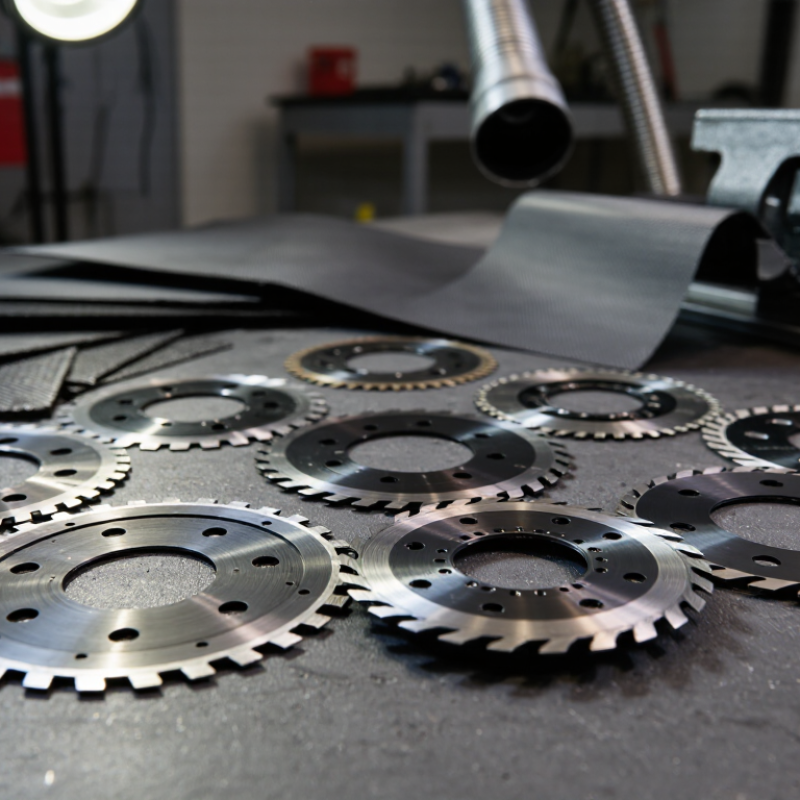
7 Best Hard Metal Blades for Carbon Fiber Cutting?

Why Carbon Fibers Rated at 3.5–7 GPa Need Abrasion-Resistant Blades

Carbon fiber filaments can reach tensile strengths of 3.5–7 GPa, according to technical data reviewed by the U.S. Department of Energy and Oak Ridge National Laboratory. That strength does not make them indestructible, but it makes ordinary steel edges wear quickly. Carbon fibers also act like fine abrasive filaments. They can polish an edge before the blade visibly dulls.

For carbon fiber cutting, seven hard-edge options deserve attention: solid carbide, carbide-grit, diamond-coated carbide, polycrystalline diamond, electroplated diamond, cermet, and fine-grit abrasive blades.

Carbide suits controlled trimming and moderate production. Diamond-coated edges usually resist abrasive wear better. Polycrystalline diamond can maintain a sharper edge, although it costs more and may chip during impact. Cermet blades offer a useful compromise, but their performance depends heavily on feed rate and support.

A practical test should examine edge life, dust formation, delamination, and cut temperature. Use a rigid fixture and inspect the edge after every batch. The Composite Materials Handbook notes that fiber damage often increases when cutting forces rise or tool geometry becomes unsuitable. Keep feeds steady. Avoid forcing a dull blade through the laminate. I have seen clean-looking cuts hide crushed surface fibers, so visual inspection alone is not enough. That is an imperfect checkpoint, but a valuable one. Cutting data from the European Composites Industry Association also emphasizes tool wear and airborne fiber control during machining. Source accuracy still matters; filament strength figures should not be confused with finished laminate strength.

Seven Carbide Blade Designs for Cutting CFRP Panels, Tubes, and Laminates

CFRP panels, tubes, and laminates need different carbide geometries because fibers can fray, delaminate, or overheat. The U.S. Department of Energy’s vehicle-lightweighting guidance estimates that a 10% reduction in vehicle mass can improve fuel economy by 6–8%. That incentive makes clean composite machining valuable, but it does not make every blade suitable.

Seven carbide designs cover common jobs: triple-chip grind teeth resist edge chipping; high-angle alternate-top-bevel teeth leave cleaner panel edges; flat-top teeth suit straight cuts; hollow-ground teeth help limit surface breakout; negative-hook teeth control grab on clamped tubes; thin-kerf blades reduce cutting load; and fine-pitch teeth support smoother laminate cuts. Not interchangeable.

Keep the workpiece supported, use extraction, and inspect both faces for fuzzing or ply lift. The FAA’s Advisory Circular 20-107B stresses substantiated composite processes rather than prescribing one universal cutter. I still find thin kerf easy to overrate: less material removed can mean less heat, but a flexible blade may wander. For tubes, secure the work firmly and test a short offcut first. Small details matter.

Compare Tooth Geometry, Kerf, and RPM with Manufacturer Specifications

Carbon fiber punishes the wrong blade. Seven hard-metal choices deserve comparison: fine triple-chip, alternate-top-bevel, flat-top, high-positive rake, carbide-tipped abrasive, diamond-grit, and polycrystalline-diamond blades. Fine triple-chip geometry usually limits edge breakout. Flat-top teeth can clear dust efficiently, but they may raise delamination risk. Diamond-grit edges resist abrasion well, though their kerf can feel aggressive.

Published machining studies in the Journal of Manufacturing Processes commonly report carbon-fiber cutting feeds near 0.05–0.20 mm per tooth. Actual values depend on laminate thickness, resin content, and support. Manufacturer specification sheets often place carbide blade speeds around 3,000–6,000 RPM for small diameters. Larger blades need lower speed. Use the rim-speed formula: RPM equals 12 times cutting speed divided by π times blade diameter. That calculation is simple. Dust is not.

Kerf matters more than many buyers expect. A 1.6 mm kerf removes less material than a 2.4 mm kerf, but thinner plates can deflect under heat. Technical guidance based on ISO 3002 geometry principles links rake angle, clearance, and chip formation; positive rake can reduce cutting force, while excessive rake may worsen fiber pullout. Compare each manufacturer’s maximum RPM, tooth pitch, plate thickness, and recommended feed. A small test coupon should measure edge fuzz, delamination depth, and temperature. Published data are useful, but they are not your laminate. My own preference would change after one poor cut.

Rank Blade Performance by Cut Quality, Wear Life, and Composite Fit

A useful carbon-fiber blade ranking starts with the cut edge, not the catalogue. Inspect both faces under magnification: fuzzy strands, resin breakout, and chipped edges signal poor composite fit. A 2021 review in the Journal of Manufacturing Processes describes abrasive fiber wear and delamination as recurring challenges in composite machining. That matters more than a fast first cut. A smooth edge saves cleanup time.

For wear life, compare blades on the same laminate, thickness, feed rate, and cutting distance. Record edge damage and cut time after fixed intervals, such as every 10 metres. Keep dust extraction consistent; otherwise, debris can distort the comparison. ASTM D3039/D3039M, the standard for tensile testing polymer-matrix composites, underscores how strongly results depend on controlled specimen preparation. Blade tests need that same discipline. Hard metal may hold an edge well, but tooth geometry and heat control still decide whether resin smears or fibers pull free. Small differences matter.

Rank composite fit by repeatability across straight cuts, tight curves, and stacked plies. A blade that performs beautifully on one thin panel may fray thicker laminates. I would not treat one shop trial as proof; test several blades and keep the less flattering results, too.

7 Best Hard Metal Blades for Carbon Fiber Cutting? — Rank Blade Performance by Cut Quality, Wear Life, and Composite Fit

Comparative guide to common tungsten-carbide blade configurations. Scores are relative, practical estimates—not results from a controlled product test—and assume a sharp blade, suitable machine, and well-supported carbon-fiber laminate.

Rank Carbide Blade Configuration Cut Quality
(1–5)
Wear Life
(1–5)
Composite Fit
(1–5)
Typical Strength Main Trade-Off Best-Suited Application
1 Fine-tooth triple-chip grind (TCG), negative hook 5 / 5 4 / 5 5 / 5 TCG alternates a flat-topped tooth with chamfered teeth; the geometry supports a clean shearing action and resists edge damage better than a very sharp, delicate tooth form. Requires a controlled feed and a compatible saw; a high tooth count can increase heat if feed is too slow. Clean crosscuts in supported CFRP sheet and laminate where edge finish matters.
2 Fine-tooth TCG, low or neutral hook 5 / 5 4 / 5 5 / 5 Low hook reduces aggressive tooth engagement, while TCG geometry is commonly selected for brittle or abrasive sheet materials. May cut more slowly than a coarser blade; results still depend on backing, clamping, and feed consistency. Thin panels, finish-sensitive cuts, and workpieces prone to surface breakout.
3 Medium-tooth TCG, negative hook 4 / 5 4 / 5 4 / 5 A practical balance between tooth engagement and cutting speed; negative hook can help limit grabbing on a suitable circular saw. Usually leaves a less refined edge than a fine-tooth option, particularly on thin or unsupported laminates. General-purpose cutting of thicker CFRP panels when both throughput and edge quality matter.
4 Fine-tooth alternate top bevel (ATB), carbide tipped 4 / 5 3 / 5 3 / 5 Alternating bevels can produce a clean slicing action in many wood-based materials and may give a good initial finish in composite laminates. The finer, sharper bevels can be more vulnerable to abrasive wear and edge chipping than robust TCG geometry. Occasional, light-duty composite cuts where an appropriate TCG blade is unavailable.
5 Coarse-tooth TCG, negative hook 3 / 5 4 / 5 3 / 5 Fewer teeth engage the material at once, which can support a faster feed and reduce rubbing when the setup is correctly controlled. Greater chip load can increase edge breakout or delamination risk, especially on thin sheet or with poor support. Rough sizing of thicker laminate where the cut edge will be trimmed or finished afterward.
6 Carbide-tipped abrasive-cutoff blade 2 / 5 3 / 5 2 / 5 Abrasive-style cutting can be useful for certain portable or rough-cutting setups and does not rely on conventional fine-tooth slicing alone. Can create substantial dust and heat; edge finish and dimensional control may be inferior to a purpose-selected TCG saw blade. Rough cuts when finish requirements are low and the tool is specifically approved for the blade.
7 General-purpose carbide blade with positive hook 2 / 5 2 / 5 2 / 5 Widely available and suitable for many ordinary woodworking tasks; a sharp blade may make an acceptable test or non-critical cut. More aggressive tooth engagement and non-specialized geometry can increase grabbing, breakout, and uneven wear in abrasive CFRP. Non-critical work only; not the preferred choice for clean, repeatable carbon-fiber cuts.

Scoring key: 1 = low relative suitability; 5 = high relative suitability. Carbon-fiber laminates are abrasive, and carbide wear varies with fiber type, resin, laminate thickness, cutting parameters, and blade condition. Use effective dust extraction and appropriate respiratory and eye protection; carbon-fiber dust is hazardous and electrically conductive.

Control Conductive CFRP Dust with OSHA 29 CFR 1910.94 Ventilation Practices

A carbide-tipped blade can cut carbon-fiber-reinforced polymer cleanly, but the cut releases fine, electrically conductive dust. A bright bench may still hide it. Dust can settle inside switches, motors, and tool vents, so capture it at the blade—not after it drifts across the room. OSHA’s 29 CFR 1910.94(b) sets ventilation criteria for covered grinding, polishing, and buffing operations. It is a useful engineering reference, not a CFRP-specific airflow prescription.

Use a close-fitting hood, a sealed duct, and a dust collector designed for conductive particles. Keep airflow steady as the blade enters and exits the work; an oversized gap can let the plume escape. OSHA’s ventilation guidance emphasizes capture at the source and proper transport through ductwork. Check pressure and airflow indicators before cutting, and inspect filters and connections regularly. A shop-vacuum label alone does not establish suitability for conductive dust.

The U.S. National Institute for Occupational Safety and Health’s hierarchy of controls places engineering controls ahead of relying only on respirators. That matters during repeated cuts, when dust can accumulate on sleeves and nearby equipment. Wipe surfaces with methods that do not raise dust, and follow the collector maker’s disposal instructions. The setup may need adjustment. Record visible escape, filter loading, and cleanup time, then revise hood position or airflow with a qualified ventilation professional.

FAQS

Why do carbon fibers wear ordinary steel blades quickly?

Carbon fibers can reach 3.5–7 GPa tensile strength. They also behave like fine abrasive filaments. The edge may polish away before visible dulling appears.

Which blade materials suit carbon-fiber cutting?

Common options include solid carbide, carbide-grit, diamond-coated carbide, and polycrystalline diamond. Electroplated diamond, cermet, and fine-grit abrasive blades also deserve testing. No single blade wins every application.

Is a harder blade always the best choice?

Not necessarily. Harder edges usually resist abrasion better, but impact can cause chipping. Feed rate, support, heat, and tooth geometry remain important.

How should blade performance be ranked?

Compare cut quality, wear life, and composite fit. Inspect both cut faces under magnification. Look for fuzzy strands, resin breakout, chipped edges, and delamination.

What makes a fair blade comparison?

Use the same laminate, thickness, feed rate, and cutting distance. Keep dust extraction consistent. Record cut time and edge damage after fixed intervals, such as every ten metres.

How can operators reduce fiber damage during cutting?

Use a rigid fixture and steady feed. Avoid forcing a dull blade through the laminate. Control heat and support stacked plies carefully.

Can a clean-looking cut still contain damage?

Yes. Surface fibers may appear smooth while hidden crushing exists underneath. Visual inspection alone is imperfect, so magnification and sample checks help.

How should a blade be tested on different laminate shapes?

Test straight cuts, tight curves, thin panels, and stacked plies. A blade that works well on one panel may fray a thicker laminate. Keep unfavorable results. They are useful.

Conclusion

Carbon fibers can reach tensile strengths of 3.5–7 GPa, but their abrasive nature can quickly wear unsuitable cutting edges and leave rough, damaged surfaces. This guide explores seven carbide blade designs for CFRP panels, tubes, and laminates, explaining how tooth geometry, kerf width, and operating speed affect cutting performance. It also emphasizes checking manufacturer specifications and matching the blade to the material thickness, shape, and intended finish.

The comparison ranks Hard Metal Blades For Carbon Fiber by cut quality, wear life, and suitability for different composite applications. Alongside practical selection considerations, the guide addresses conductive CFRP dust, highlighting effective ventilation and dust-control practices consistent with OSHA 29 CFR 1910.94. The goal is to help readers choose a blade thoughtfully and achieve cleaner, more consistent cuts while managing wear and airborne debris.


Sienna

Sienna

Sienna is a skilled marketing professional with a deep expertise in our company’s core products and services. With a passion for innovation and detail, she plays a pivotal role in crafting insightful blog posts that not only highlight the unique features of our offerings but also provide valuable......