Fiberglass looks light and harmless, but cutting it can quickly expose a blade’s weaknesses. Glass fibers are abrasive, while resin can smear across the teeth and reduce cutting control. The right blade should produce a clean edge, resist premature wear, and remain stable during repeated cuts. This guide examines seven tungsten carbide options for fiberglass cutting, with attention to tooth design, blade thickness, cutting speed, and compatibility with common tools.
Tungsten Carbide For Fiberglass Cutting is often selected because carbide retains a hard cutting edge longer than ordinary steel. However, hardness alone does not guarantee good results. A coarse blade may cut quickly but leave splintered edges. A fine-tooth blade can improve surface quality, yet it may clog when heat builds up. Dust extraction also matters, especially when trimming panels indoors. Dust changes everything.
The recommendations consider practical details, including vibration, blade life, kerf width, and operator comfort. They also recognize that no single blade suits every fiberglass sheet, pipe, boat panel, or reinforced plastic component. Our initial assumption was that the most expensive blade would perform best. Real cutting conditions challenged that idea. Some affordable blades delivered cleaner results on thin laminates, while premium options lasted longer under heavier use. That difference deserves attention. Always match the blade to the material thickness and tool speed, then test a small area before making a final cut.
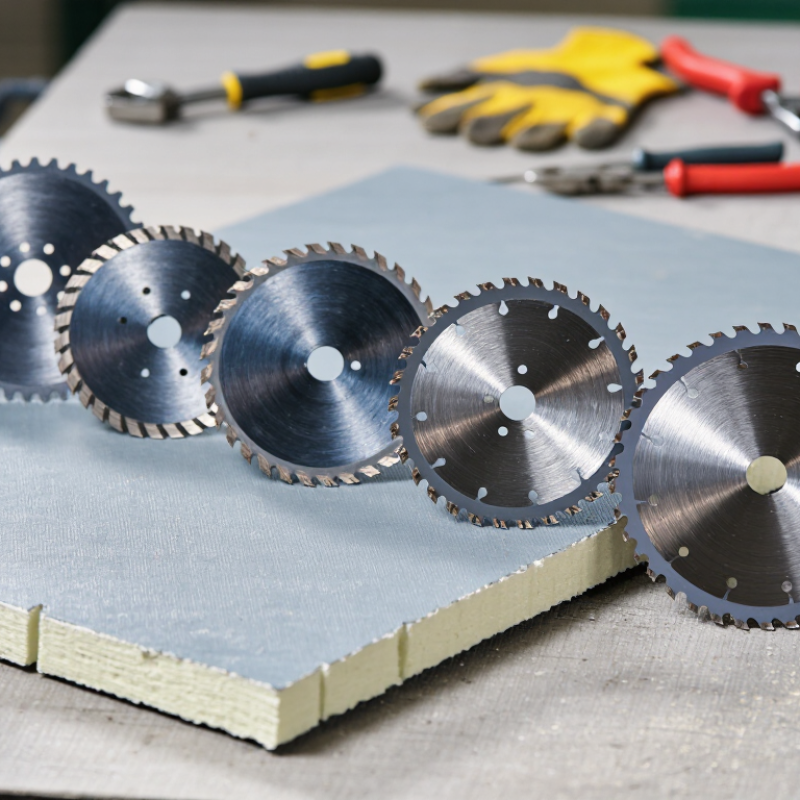
Tungsten carbide blades suit fiberglass because carbide resists abrasion better than ordinary steel. Fiberglass combines hard glass strands with resin, so cutting feels less like slicing wood and more like grinding a woven surface.
A 2023 MarketsandMarkets report valued the global fiberglass market at approximately USD 16.3 billion and projected continued growth through 2028. More production means more trimming, drilling, and repair work.
For thin fiberglass sheets, choose a fine-tooth carbide-tipped blade. Carbide-grit blades often perform better on thick laminates, pultruded profiles, and glass-filled panels.
Keep the blade speed moderate, feed steadily, and avoid forcing the cut. Excess pressure creates heat, frays the laminate, and dulls the edge quickly. The resin may melt first. The glass remains abrasive.
Simple, but easy to forget.
Use local exhaust ventilation and eye protection. OSHA’s respirable crystalline silica standard limits exposure to 50 micrograms per cubic meter over an eight-hour shift, although fiberglass dust has different hazards and still requires control.
A vacuum near the cutting line can reduce visible dust substantially. In practice, I inspect the cut edge after every few passes; a clean edge can hide early carbide wear.
I sometimes select a blade that is too aggressive, especially on thin panels. That mistake produces vibration and chipped fibers.
Blade choice should follow laminate thickness, fiber direction, resin hardness, and the required edge quality, not just tooth count.
(Sources: MarketsandMarkets, Fiberglass Market; OSHA, 29 CFR 1910.1053.)
Fiberglass can dull ordinary steel teeth quickly. Seven tungsten carbide blade designs offer more dependable cutting performance. A fine-tooth circular blade produces cleaner panel edges with less chipping. A triple-chip grind improves finish quality on laminated sheets. A thin-kerf blade removes less material and lowers cutting resistance. A negative-rake blade helps reduce grabbing during handheld work.
For thicker fiberglass, a coarse-tooth carbide blade clears dust and debris more effectively. It may leave a rougher edge, though. A carbide-grit reciprocating blade suits curved cuts, repairs, and confined spaces. Its abrasive edge cuts without relying on large teeth. A hole saw with brazed carbide teeth creates service openings for cables and fittings. The seventh option is a segmented carbide blade, which manages interrupted cuts and uneven surfaces. Its segment spacing helps release heat, but excessive pressure can still damage the laminate.
In practical workshop use, blade choice should match thickness, backing material, and edge requirements. I usually support the panel close to the cut line. This reduces vibration and splintering. Moderate feed pressure works better than forcing the blade. Always inspect tooth wear, missing carbide, and resin buildup before cutting. Dust control matters because fiberglass particles irritate skin and lungs. A fitted respirator, eye protection, gloves, and extraction system improve working reliability. I still find thin panels unpredictable; even a premium cutting edge can chip when the laminate has hidden voids.
Key Features of the Seven Best Fiberglass Cutting Blade Profiles
The chart compares seven generic tungsten carbide blade profiles using a relative 1–10 suitability index. Precision reflects edge control, cutting speed reflects material removal rate, and finish quality reflects the likelihood of producing a clean fiberglass edge with reduced splintering.
Choosing among the 7 best tungsten carbide blades for fiberglass cutting requires more than comparing prices. Tooth design controls heat, chipping, and cutting speed. Carbide-grit blades offer a rough, abrasive edge and resist fiberglass wear. Tipped blades provide cleaner cuts but may snag thin laminates. Continuous-rim designs reduce splintering on panels, although they can cut more slowly. A 4½-inch blade suits repairs and tight corners. A 7¼-inch blade gives better depth and stability. Larger 10-inch blades support production work, but they demand stronger equipment and firmer control.
Performance also changes with tooth count. Coarse configurations remove material quickly and reduce clogging. Fine configurations leave cleaner edges on thin sheets. They may generate more heat. GWEC’s Global Wind Report 2024 recorded 117 GW of new wind capacity in 2023. That growth reflects rising demand for repeatable composite trimming in manufacturing and maintenance. However, field results still vary with resin hardness, laminate thickness, and operator pressure. My own practical preference is moderate feed pressure, yet this is not a universal rule.
Tip: Match blade diameter with the tool’s rated speed. Keep the cut supported on both sides. Use local extraction and suitable eye and respiratory protection. NIOSH guidance emphasizes controlling airborne dust at its source. Inspect carbide teeth after every difficult cut. A slightly worn blade can look usable while producing rough edges and excessive heat. Cutting dry is often convenient, but wet methods may damage some tools or workpieces. Test on scrap first. That small step prevents expensive mistakes.
| Rank | Blade Design | Typical Size | Cutting Edge | Best Use | Cut Quality | Cutting Speed | Dust and Heat Control | Key Limitation | Overall Rating |
|---|---|---|---|---|---|---|---|---|---|
| 1 | Fine-tooth tungsten carbide-tipped circular blade | 7-1/4 in diameter; 40–60 teeth | Small brazed carbide tips with a controlled tooth profile | Straight cuts in fiberglass panels, sheets, and laminate boards | Very clean edges with low breakout when the workpiece is well supported | Fast | Produces fine abrasive dust; a dust extractor and outdoor ventilation are recommended | Requires a circular saw and careful feed control; unsuitable for tight curves | ★★★★★ |
| 2 | Triple-chip-grind tungsten carbide circular blade | 10 in diameter; 60–80 teeth | Alternating flat and chamfered carbide teeth | Thick fiberglass laminate, composite board, and repeated straight cuts | Excellent edge consistency and reduced chipping compared with coarse-tooth designs | Fast to moderate | Lower impact per tooth helps reduce splintering, but dust extraction remains necessary | Needs a table or compound saw with sufficient power and stable workholding | ★★★★★ |
| 3 | Tungsten carbide-grit jigsaw blade | 3–5 in blade length; grit-coated edge | Continuous carbide-grit cutting surface with no conventional teeth | Short curves, cutouts, openings, and thin-to-medium fiberglass sheets | Clean, controlled cuts with less tooth snagging and reduced glass-fiber pullout | Moderate | Usually generates fine dust rather than large chips; use extraction and respiratory protection | Slower than toothed blades and can heat up if excessive pressure is applied | ★★★★☆ |
| 4 | Tungsten carbide-tipped jigsaw blade | 4–5 in blade length; approximately 10–14 teeth per inch | Small carbide teeth with a fine or medium tooth pitch | Medium-thickness fiberglass panels requiring both curves and straight cuts | Good edge control with faster stock removal than a grit-coated blade | Moderate to fast | Produces chips and abrasive dust; a lower orbital setting helps limit edge damage | Tooth loading and vibration can occur in thin, flexible sheets | ★★★★☆ |
| 5 | Carbide-grit reciprocating saw blade | 6–9 in blade length; continuous grit edge | Heavy-duty tungsten carbide grit bonded to a flexible blade body | Demolition work, thick fiberglass parts, pipes, tanks, and awkward access areas | Acceptable to good; the edge is generally rougher than a circular-saw cut | Fast for rough removal | Handles abrasive material well, but aggressive strokes can create substantial dust | Not the first choice for visible finish edges or precision joinery | ★★★★☆ |
| 6 | Fine-tooth carbide-tipped reciprocating blade | 6–9 in blade length; approximately 6–10 teeth per inch | Discrete tungsten carbide teeth on a reinforced reciprocating blade | Thicker fiberglass sections where speed and reach are more important than finish | Good for a reciprocating saw; less precise than a jigsaw or circular blade | Fast | Good wear resistance in abrasive composites; use reduced pressure to control heat | Vibration may cause edge splintering, especially on unsupported thin panels | ★★★☆☆ |
| 7 | Carbide-grit oscillating multi-tool blade | 1-3/8–2-1/2 in cutting width | Fine tungsten carbide grit along a narrow, toothed or straight edge | Flush cuts, plunge cuts, trimming, corners, and small openings | Very good control in confined spaces; finish depends strongly on operator technique | Slow to moderate | Low impact and limited cutting width help control material removal, but dust is still abrasive | Small cutting area makes it inefficient for long or deep cuts | ★★★☆☆ |
Choosing among the seven best tungsten carbide blades for fiberglass cutting starts with the material, not the blade label. Fiberglass is unforgiving. Thin sheets usually need a fine-tooth carbide blade, while thick panels benefit from a coarse tooth pattern or carbide-grit edge. Check the manufacturer’s cutting range and match it to your panel thickness. A blade designed for straight cuts may perform poorly on tight curves.
Your tool also matters. A carbide jigsaw blade offers control for openings and curved lines. A circular saw blade suits long, steady cuts when the panel is firmly supported. A reciprocating blade works for rough removal, but it can leave chipped edges.
For clean corners, choose a narrow blade with reinforced teeth. Count the teeth per inch carefully; more teeth can reduce splintering, but they may clog with resin dust.
I once chose an aggressive blade for a thin fiberglass panel, expecting faster work. It overheated, chipped the surface, and made the edge harder to repair. That mistake changed my approach. I now test each blade on a scrap piece, keep the feed pressure light, and use dust extraction whenever possible.
Wear eye protection, gloves, and a suitable respirator for airborne fibers. Inspect the carbide tips before cutting; a damaged tip can wander suddenly. Blade life also depends on resin hardness, cutting speed, and support beneath the panel. Sometimes the slower option is safer.
For fiberglass cutting, tungsten carbide blades perform best when the workpiece stays stable. Clamp the panel firmly before starting. Use a guarded saw and keep both hands outside the cutting path. A fine-tooth carbide blade usually produces a cleaner edge, but excessive pressure can chip teeth and create rough splinters. Feed slowly. Let the blade do the work.
Fiberglass dust can irritate the eyes, skin, and breathing passages. Use sealed safety glasses, suitable respiratory protection, and local extraction whenever possible.
OSHA estimates that workplace eye injuries cost about 300 million dollars annually. Its 29 CFR 1910.133 standard also requires appropriate eye protection for flying particles. NIOSH recommends limiting occupational noise exposure to 85 dBA over eight hours. Cutting composite panels may approach that level, especially in enclosed workshops. Hearing protection is sensible, even when the cut seems brief.
Tips:
Inspect every carbide tooth before use. A chipped tooth can pull the blade sideways. Remove resin buildup with a non-metal brush after cooling. Do not strike the teeth against metal. Store the blade dry, covered, and separated from other tools. Check the arbor hole and guard as well. A small crack may be missed during a rushed inspection. That is an easy mistake to repeat. Replace damaged blades instead of forcing them through the final cut.
Fiberglass contains abrasive glass strands and resin. Carbide resists wear better than ordinary steel. Cutting feels like grinding woven material.
Choose a fine-tooth carbide-tipped blade. It can reduce splintering on thin panels. Test it on scrap first.
Use a coarse-tooth blade or carbide-grit edge. These options handle thick laminates and glass-filled panels better. Keep the cut steady.
A jigsaw with a narrow carbide blade offers better control. Use reinforced teeth for clean corners. Support the panel underneath.
Yes, when the panel stays firmly supported. Maintain moderate speed and light feed pressure. Do not force the blade.
Reduce pressure and keep the feed steady. Excess force creates heat and damages the resin. The resin may melt first.
Use local exhaust ventilation and a vacuum near the cutting line. Wear eye protection, gloves, and suitable respiratory protection. Dust control matters.
Inspect the carbide tips before cutting. Check the edge after several passes. Early wear may hide behind a clean-looking cut.
Choosing an aggressive blade for thin panels can cause vibration and chipped fibers. I have made that mistake. A slower cut is sometimes safer.
Consider panel thickness, fiber direction, resin hardness, tool type, and required edge quality. Tooth count alone can mislead.
Choosing the right blade is essential for clean, efficient fiberglass cutting, and tungsten carbide offers an excellent balance of hardness, wear resistance, and cutting stability. This guide explores seven high-performing fiberglass cutting blade designs, explaining how their tooth patterns, sizes, edge shapes, and construction affect speed, precision, dust production, and service life. It also introduces the advantages of Tungsten Carbide For Fiberglass Cutting, especially when working with abrasive composite materials that can quickly wear down ordinary blades.
The article compares blade designs and cutting performance to help readers match a blade to different fiberglass projects, whether making straight cuts, trimming panels, or shaping detailed sections. It also provides practical selection guidance based on material thickness, cutting method, and desired finish. Finally, the summary emphasizes safe working practices, including eye and respiratory protection, secure material support, controlled cutting pressure, and regular blade inspection, cleaning, and replacement to maintain reliable results.

Shen Gong Carbide