Top 10 Types of Carbide Tools for Composites?

Time:2026-09-16 Author:Liam
0%

Selecting Arbide Tools For Composites requires more than comparing hardness, price, or advertised tool life. Carbon-fiber laminates, glass-fiber panels, and carbon fiber reinforced plastics behave differently under cutting pressure. Their abrasive fibers can dull edges quickly. Their layered structures can also split, fray, or delaminate around a drilled hole.

Professor J. Paulo Davim, a recognized researcher in advanced machining, states, “Machining of composite materials is a challenging task due to their heterogeneous and anisotropic nature.” That observation should guide every tooling decision. A polished diamond-coated router may suit carbon-fiber trimming, while a solid carbide drill can perform better in controlled holemaking. PCD tools, burrs, end mills, countersinks, and compression cutters each solve different damage risks. No tool wins every time.

This guide examines the top 10 types of carbide tools for composites through practical criteria: edge geometry, coating, chip evacuation, cutting temperature, surface finish, and expected tool life. It also considers real workshop details, such as dusty extraction systems, fixture stiffness, feed consistency, and inspection under bright light. Small mistakes matter. Excessive heat can soften resin. A worn edge can leave fuzzy fibers before the operator notices. The list is useful, but it is not universal. Material grade, laminate thickness, machine rigidity, and cutting data can change the result. Some recommendations may need adjustment after testing. That is the honest part. Good selection comes from evidence, measured wear, and careful review of the finished component.
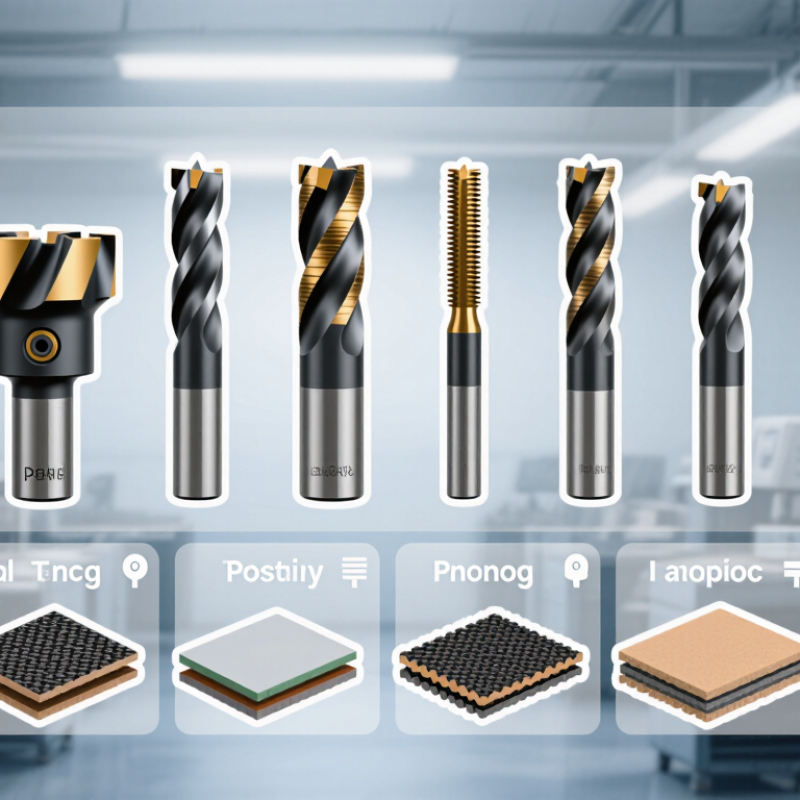
Top 10 Types of Carbide Tools for Composites?

What Carbide Tools Are and Why They Suit Composite Materials

Carbide tools use extremely hard cutting edges, usually made from tungsten carbide particles bonded with metal. Their hardness helps them resist wear during demanding composite machining. This matters because carbon fiber, glass fiber, and aramid fibers can quickly dull ordinary cutting tools. A sharp carbide edge cuts fibers cleanly instead of pulling them from the laminate. That reduces fraying, splintering, and edge delamination. It also supports cleaner holes and smoother routed surfaces. Less heat is helpful too. Excessive heat may soften resin or damage the surrounding layers.

Small detail, big effect.

For composite work, tool selection depends on the material, thickness, and cutting operation. Compression routers can reduce fiber breakout on laminated panels. Specialized drills help create round holes without crushing the exit surface. End mills suit trimming and pocketing, while countersinks prepare controlled fastener seats. The cutting geometry still matters as much as carbide hardness. Feed rate, spindle speed, and chip evacuation must match the laminate. Operators should inspect edges frequently, especially when dust becomes heavy or the surface turns fuzzy. Carbide is durable, not indestructible. Highly abrasive laminates may require a different cutting solution or more frequent replacement. A common mistake is assuming one tool works for every composite. Reliable results come from trial cuts, measured wear, and careful review of the finished edge.

How Carbide Tool Geometry Affects Composite Cutting Performance

Carbide tools remain common in composite machining because they balance hardness, cost, and edge stability. The main choices include router bits, burrs, end mills, drills, countersinks, reamers, saw blades, slot cutters, compression cutters, and diamond-coated carbide tools. MarketsandMarkets’ 2024 Carbon Fiber Market report forecasts growth from about USD 4.3 billion in 2024 to USD 6.6 billion by 2029. More composite parts will require controlled cutting, not simply harder tools.

Geometry decides more. A high-helix flute removes chips quickly, but it can lift surface fibers near an unsupported edge. A low-helix design reduces peeling and often produces a cleaner laminate exit. Compression cutters push the upper and lower skins inward, limiting delamination during panel trimming. Drill points need careful attention. Split points reduce walking, while sharper margins can lower thrust force and heat. A small clearance angle may rub the matrix; excessive clearance can weaken the cutting edge.

Cutting trials should measure thrust, torque, burr height, delamination length, and hole diameter. The 2024 JEC Observer estimates global composites production at more than 12 million tonnes annually, increasing pressure for repeatable machining. That trade-off matters. In practice, a slightly duller edge can sometimes protect a fragile laminate better than an aggressive geometry. I have seen feed rates chosen from metal-cutting charts create dusty edges and exposed fibers. The mistake was not carbide quality. It was assuming every carbon-fiber laminate behaves alike. Geometry, support, fiber direction, and heat must be evaluated together. Perfect settings rarely survive the first real component.

Top Ten Carbide Tool Types for Different Composite Machining Tasks

Composite machining demands tool selection by task, not by habit. Solid carbide compression routers suit laminated panels because their opposing flutes help reduce edge breakout. Upcut end mills lift chips from open pockets, while downcut end mills press fibers near the surface. Carbide burrs with fine cutting edges help trim irregular contours. Use them carefully. Dust control matters.

Solid carbide drills create clean holes when feed pressure remains steady. Step drills can enlarge thin composite skins with less sudden grabbing. Ball-nose end mills follow curved molds and shaped surfaces, although they may leave more finishing marks. Chamfer mills prepare clean entry edges around holes and panel openings. Their depth must be checked often. Small errors spread.

Carbide reamers improve hole accuracy after drilling, especially where fasteners require consistent fit. Countersinks create controlled recesses for flush hardware, but excessive pressure can expose fibers or weaken the surface. Keep edges cool. Heat can soften resin and smear the cut rather than improve it. In practice, spindle speed, feed rate, tool projection, and vacuum support matter as much as tool geometry. I would not treat any table as universal; material thickness, fiber direction, and resin content can change the result. A careful test cut remains more reliable than confident guessing.

Top 10 Types of Carbide Tools for Composites

Carbide tools are selected according to the composite structure, cutting direction, hole quality requirements, and the risk of delamination or fiber pull-out. The suitability index below reflects common machining applications for carbon-fiber-reinforced polymer (CFRP), glass-fiber-reinforced polymer (GFRP), honeycomb panels, and laminated composites.

How to Select Carbide Tools by Fiber, Resin, and Operation

Choosing among the top 10 carbide tool types starts with the laminate, not the catalog. Carbon fiber is abrasive, while glass fiber can wear cutting edges even faster. Aramid fibers may fuzz, and thermoplastic resin can soften from heat. That matters. MarketsandMarkets’ 2024 Carbon Fiber Market report forecasts continued growth through 2030, increasing demand for consistent trimming and drilling. The 2024 Global Wind Report also notes larger composite blades, where hole quality becomes a practical production issue.

For carbon/epoxy panels, use twist drills or brad-point drills for clean holes. Step drills suit thin skins, while reamers improve diameter control. Countersinks prepare flush fastener seats. Compression routers reduce exit delamination. Straight-flute routers suit brittle laminates. Diamond-cut burrs handle edges and local repairs. Ball-nose end mills follow contoured surfaces, and slot mills open narrow channels. These are the ten useful carbide categories. Resin still changes the result.

Thermoset laminates usually need sharp edges, stable clamping, and vacuum extraction. Thermoplastic parts need lower heat input, shorter engagements, and frequent chip clearance. Use sacrificial backing behind thin panels. Test feed and spindle speed on scrap first. A perfect tool does not exist. Tool-life estimates are often optimistic, especially with glass fiber. Record thrust, burr height, hole diameter, and edge temperature during trials. ISO 8688-2 style tool-life testing can improve comparisons, but shop-floor evidence remains essential.

Top 10 Types of Carbide Tools for Composites — How to Select Carbide Tools by Fiber, Resin, and Operation
Rank Carbide Tool Type Best-Matched Fiber or Filler Typical Resin or Matrix Recommended Operations Useful Geometry or Construction Why Select It Key Limitations and Selection Checks
1 Compression Router Bit Carbon fiber Glass fiber Aramid Sandwich panels Epoxy, polyester, vinyl ester, and thermoplastic laminates Through-cutting, profiling, trimming, and nesting of laminated panels Upcut and downcut sections push the laminate in opposite directions, helping reduce top-surface and bottom-surface breakout. Choose flute length slightly greater than the laminate thickness. It requires adequate chip evacuation and is not ideal for very thin, unsupported sheets or interrupted cuts.
2 Upcut Spiral Router Bit Carbon fiber Glass fiber Natural fiber Thermoset laminates and fiber-reinforced thermoplastics Open-edge trimming, pocketing, slotting, and chip evacuation from the cut Its helix lifts chips from the cut and normally provides efficient evacuation in dry machining. Upward cutting force can lift or delaminate the top plies. Use firm workholding, shallow engagement, and a sharp carbide edge when surface quality is critical.
3 Downcut Spiral Router Bit Carbon fiber Glass fiber Decorative laminates Epoxy, phenolic, polyester, and vinyl ester composites Top-surface trimming, shallow engraving, and edge finishing Downward cutting action can improve top-face edge quality and hold the upper plies against the workpiece. Chips are driven toward the workpiece, increasing heat and the risk of recutting. Use effective dust extraction and avoid deep pockets unless chip evacuation is sufficient.
4 O-Flute Carbide Router Bit Glass fiber Carbon fiber Short-fiber thermoplastics PEEK, PEI, PPS, nylon, polypropylene, and other thermoplastic matrices Trimming, slotting, and routing where heat-sensitive thermoplastic chips must clear quickly A large polished flute provides space for chip removal and can reduce chip packing and heat buildup. It is less suitable for highly abrasive continuous-fiber laminates than specialized abrasive-resistant geometries. Match flute count and feed rate to the material’s softening temperature.
5 Carbide Burr or Rotary File Carbon fiber Glass fiber Aramid Filled composites Epoxy, polyester, vinyl ester, phenolic, and thermoplastic matrices Manual deburring, edge blending, localized removal, and finishing of irregular contours Compact burr profiles reach corners, apertures, and complex contours that are difficult to machine with a router. Single-cut or coarse-tooth designs can reduce clogging. Use dust extraction and respiratory protection because composite dust is hazardous; excessive pressure can generate heat and smear resin.
6 Carbide-Tipped or Solid-Carbide Twist Drill Carbon fiber Glass fiber Hybrid laminates Primarily epoxy and other thermoset laminate systems General-purpose hole drilling, pilot holes, and clearance holes Carbide maintains edge hardness against abrasive fibers and can produce clean holes when point geometry and support are appropriate. Standard metal-drill geometry may cause delamination or exit breakout. Use a suitable composite point, backing support, controlled feed, and frequent inspection for edge wear.
7 Step Drill Thin carbon laminates Glass laminates Mixed stacks Epoxy, polyester, vinyl ester, and thermoplastic laminates Progressive sizing of thin panels, cover sheets, and non-structural apertures Each step engages a limited thickness and can reduce grabbing compared with a large conventional drill. It also produces multiple hole diameters with one tool. Step drills are generally unsuitable for deep, thick, or highly structural laminates. Confirm that the step height covers the panel thickness without rubbing the work surface.
8 Carbide Countersink or Counterbore Carbon fiber Glass fiber Abrasive laminates Epoxy and other cured thermoset matrices Flush-fastener preparation, bolt-head seating, and controlled spot-facing Carbide cutting edges resist the abrasive action of exposed fibers and provide a repeatable seat for flush hardware. Use a pilot that matches the existing hole and support the laminate. Excessive axial force can crush the surface plies or create a larger delamination zone.
9 Solid-Carbide End Mill Carbon fiber Glass fiber Metal-composite stacks Epoxy, BMI, phenolic, PEEK, PPS, and other engineered matrices CNC pocketing, slotting, interpolation, contouring, and fixture-based machining It supports controlled radial and axial engagement and is suitable for rigid CNC machining of complex profiles. Select a flute count, helix, and edge preparation for the specific fiber and matrix. For aluminum-composite stacks, verify that the tool geometry manages both abrasive composite dust and ductile metal chips.
10 Carbide-Tipped Circular Saw Blade Glass fiber panels Carbon fiber sheets Honeycomb panels Epoxy, polyester, vinyl ester, and thermoplastic panel systems Straight sawing, panel sizing, and high-volume cut-off operations Multiple carbide teeth provide productive straight cuts and can be selected for coarse or fine surface requirements. Tooth count, hook angle, blade stiffness, and workpiece support strongly affect breakout. Use a sacrificial backing board where possible and maintain effective dust extraction.
General selection guidance: Carbon and glass fibers are highly abrasive, while aramid fibers tend to fuzz or pull out during cutting. Thermoplastic matrices require strong chip evacuation and careful heat control because they can soften and re-weld. For all composite machining, use rigid workholding, sharp edges, controlled engagement, and local dust extraction. Cutting parameters should be validated on the actual laminate thickness, fiber architecture, cure condition, and machine setup.

Best Practices for Using and Maintaining Carbide Tools on Composites

Carbide tools remain practical for composite machining because they resist abrasion and hold a sharp edge. Common choices include compression routers, diamond-cut burrs, solid-carbide drills, step drills, countersinks, end mills, reamers, slitting cutters, and edge-trimming tools. Each geometry matters. A compression tool can reduce fiber breakout, while a sharp drill point limits delamination at the exit.

Tool care starts before cutting. Check runout, chip load, and fixture stiffness every shift. Even a small runout can leave fuzzy edges and uneven heat marks. Use vacuum extraction, not compressed air, to control airborne dust. OSHA’s respirable crystalline silica standard sets an eight-hour exposure limit of 50 micrograms per cubic meter when silica-filled materials are machined. NIOSH also recommends local exhaust ventilation and suitable respiratory protection for composite dust hazards.

Keep tools dry, clean, and separated in protective sleeves. Inspect flutes under magnification; polished edges may hide early wear. Replace a tool when burrs increase, torque rises, or the laminate begins burning. Tool-life charts from cutting-tool studies are useful, but they are not universal. I still record spindle speed, feed, material stack, and edge quality after every batch. It feels excessive. It catches mistakes. Never sharpen a coated carbide tool casually, because changing its geometry can worsen delamination and shorten tool life.

FAQS

How should I choose a carbide tool for carbon-fiber laminates?

Start with the laminate and operation. Twist drills, brad-point drills, and compression routers often produce cleaner cuts. Test the edge carefully.

Which tools work well for thin composite skins?

Step drills suit thin skins and reduce sudden cutting loads. Use sacrificial backing behind the panel. It helps.

When should I use a reamer or countersink?

Use a reamer when hole diameter needs tighter control. Use a countersink for flush fastener seats. Check for edge breakout.

How can I reduce delamination during drilling?

Use a sharp drill point, firm clamping, and backing material. Control feed near the exit. Slow is not always better.

Which tool is suitable for contoured composite surfaces?

Ball-nose end mills follow curved surfaces. Diamond-cut burrs suit edges and small repairs. Keep engagement short.

How do thermoset and thermoplastic laminates differ during machining?

Thermosets need sharp tools, stable clamping, and dust extraction. Thermoplastics need lower heat, shorter engagement, and frequent chip removal. Heat changes everything.

What should I check before using a carbide tool?

Check runout, chip load, fixture stiffness, and tool cleanliness. Even small runout can create fuzzy edges and heat marks.

How can I recognize carbide tool wear?

Watch for higher burrs, rising torque, burning, or changing hole diameter. Inspect flutes under magnification. Polished edges can mislead you.

How should carbide tools be stored and maintained?

Keep tools dry, clean, and separated in protective sleeves. Do not casually sharpen coated tools. Geometry changes may worsen delamination.

How can I improve tool-life estimates in composite machining?

Test feed and spindle speed on scrap material first. Record thrust, temperature, burr height, hole diameter, and edge quality. Estimates can be optimistic.

Conclusion

Carbide tools are valued in composite machining because their hardness, wear resistance, and ability to maintain a sharp cutting edge help manage abrasive fibers and heat-sensitive resins. This article explains how tool geometry—including flute design, cutting angle, edge preparation, and point shape—affects chip evacuation, delamination control, surface quality, and tool life. It also introduces ten practical carbide tool types for tasks such as drilling, routing, trimming, milling, profiling, and finishing.

The guide further explains how to select Arbide Tools For Composites according to fiber type, resin system, laminate structure, and machining operation. Readers will learn why different composites require different edge designs, cutting conditions, and cooling strategies. Finally, it presents best practices for setup, feed and speed control, dust management, inspection, cleaning, and storage, helping users improve consistency, reduce damage, and extend tool performance during composite manufacturing.


Liam

Liam

Liam is a dedicated marketing professional with a profound expertise in the industry, where he excels at highlighting the unique advantages of our core products. With a keen understanding of market trends and consumer needs, Liam frequently updates our company’s professional blog, providing......